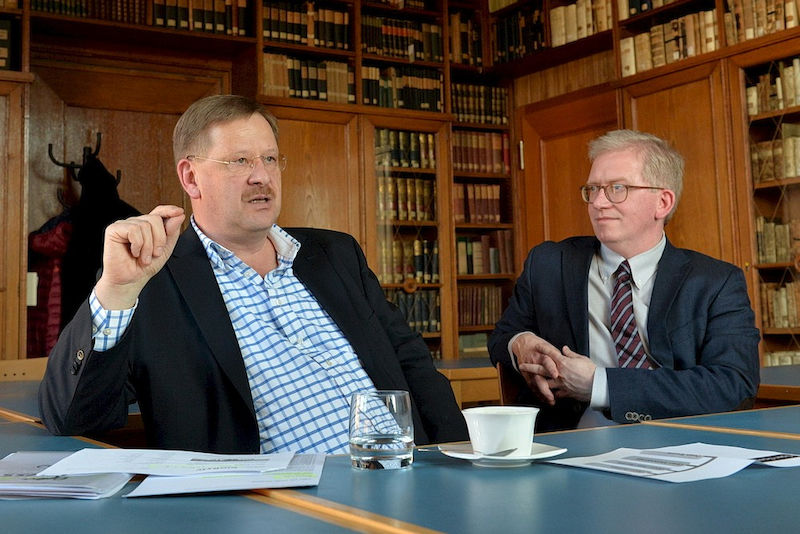
From historical manuscripts to digital databases: Stephan Feller (left) and Stefan Artmann sit down for a chat in the ULB’s Hungarian Library.
© Michael Deutsch
07.04.2016 in Research, Science

Making science freely available: Open access publishing

The open access movement began 15 years ago. Prof. Stephan Feller, a molecular biologist, and Dr. Stefan Artmann, a private lecturer in philosophy, discuss how it will change science in 2016 and the opportunities and challenges that will arise as a result of its development into an open exchange of specialist publications. It is a topic that occupies both men. Feller is the editor-in-chief and co-founder of the Open Access Journal “Cell Communication and Signalling”. Artmann, who heads up the presidential office at the Leopoldina, is a member of the working group “Open Access”, part of the priority initiative “Digital Information” of the Alliance of Science Organisations in Germany. Read more

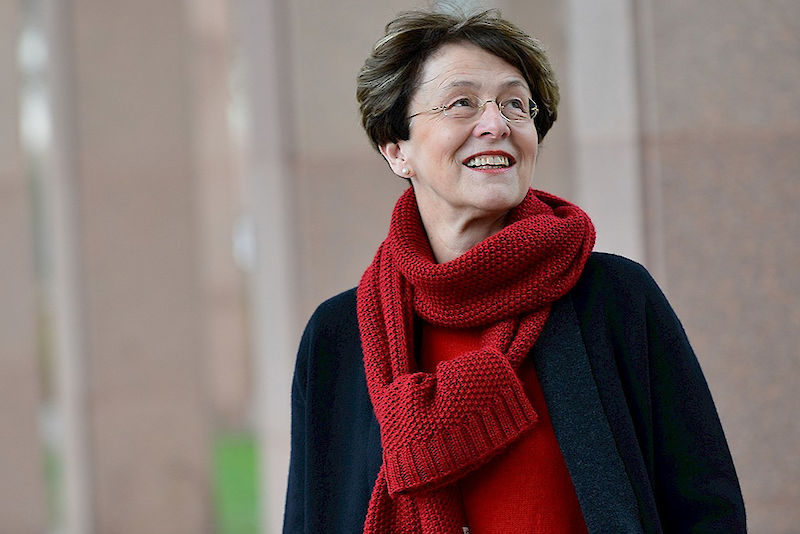
Professor Ingrid Mertig at the Weinberg Campus
© Michael Deutsch
30.03.2016 in People, Science

“Success means having scientific insight”

If it wasn’t for Professor Ingrid Mertig, Nobel laureate Albert Fert would not be visiting the Weinberg Campus as often as he does. And perhaps Humboldt Professor Stuart Parkin wouldn’t have decided to come to the University. Mertig has been teaching and conducting research at Martin Luther University for the past 15 years as a professor of quantum theory of the solid state. Here she has built up the key research area “nanostructured materials”, which she has decisively shaped over the years as the spokesperson for the collaborative research centre (CRC) “Functionality of Oxidic Interfaces”. Read more

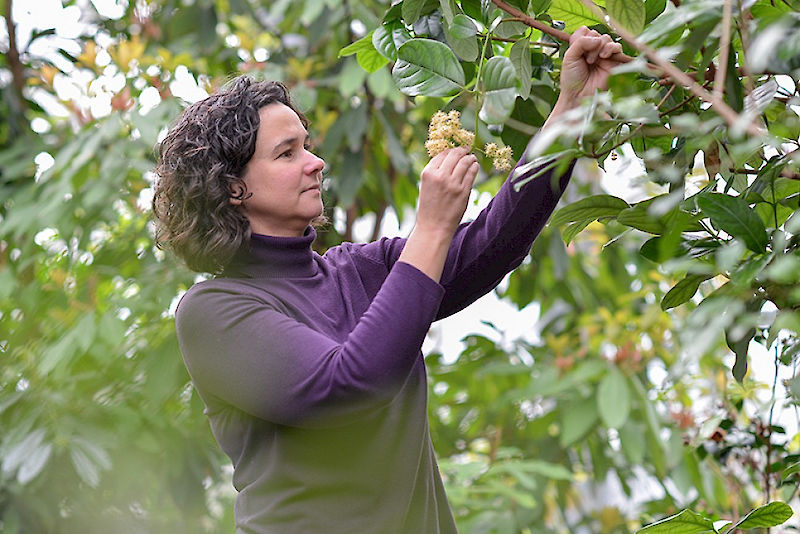
“I am only interested in animals, insects and microorganisms if they affect my plants” – Tiffany Knight in one of the greenhouses of the Botanical Garden in Halle
© Markus Scholz
24.03.2016 in People, Science

Fascinated by plants

Humboldt Professor Tiffany Knight studies the changes of ecosystems over long periods of time and the effects that a loss of biodiversity may have on the ecosystem. In February 2016, the affiliation of the renowned US-scientist changed from the Midwestern US to Central Germany. She is now working at the German Center of Integrative Biodiversity Research (iDiv) Halle-Jena-Leipzig. Read more

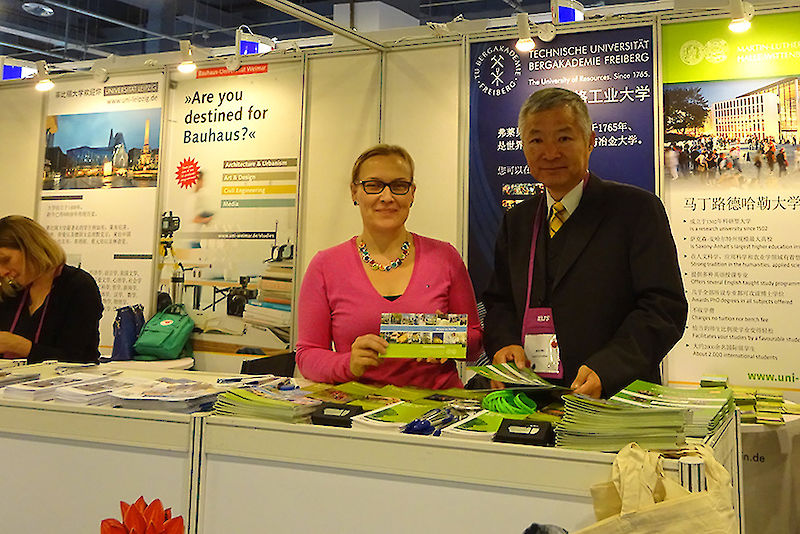
Dr. Manja Hussner, Head of International Office
© privat
16.02.2016 in Study and Teaching, Miscellaneous, Research, Campus, Science

University strengthens links with China

2015 has been a busy year for relations between China and Halle. The first Chinese language teacher provided by the Confucius Institute in Beijing has been working at the University of Halle since this April. In May, the University of Halle and the Beijing University of International Business and Economics sealed a partnership. And through the Panda Programme, the University of Halle was represented at the largest education fairs in China. Read more

The World Health Organisation says that changing eating habits and adopting a healthier lifestyle could stop the diseases developing in 80 percent of cases.
© Anna Karwowska / lia
09.12.2015 in Research, Science

“nutriCARD” aims to make food healthier

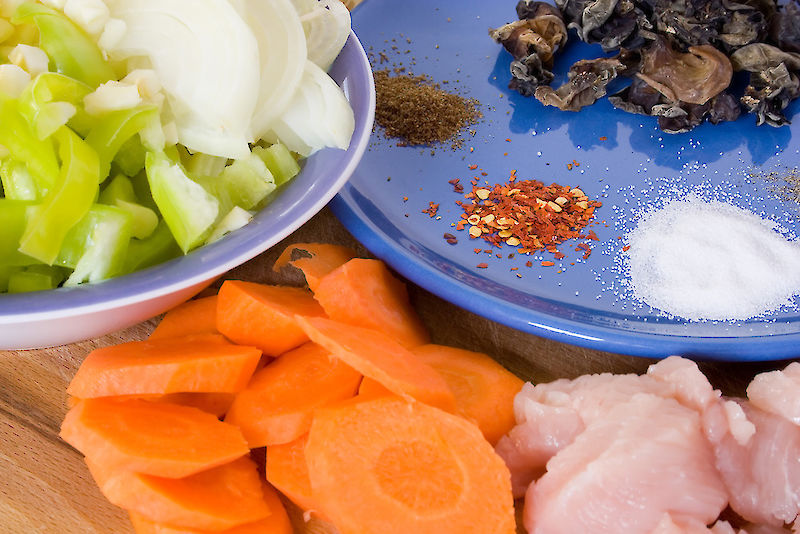
Pizzas, sweets and crisps – we all know that these kinds of food are unhealthy, but we still don’t want to give them up. That is why, rather than focusing on changing our eating habits, researchers from the universities of Halle, Jena and Leipzig have come together in the “nutriCARD” competence cluster to try and make food healthier. By doing so, they hope to prevent cardiovascular diseases in the long term. Cardiovascular diseases are the main cause of death in Europe, but the World Health Organisation says that changing eating habits and adopting a healthier lifestyle could stop the diseases developing in 80 percent of cases. Read more

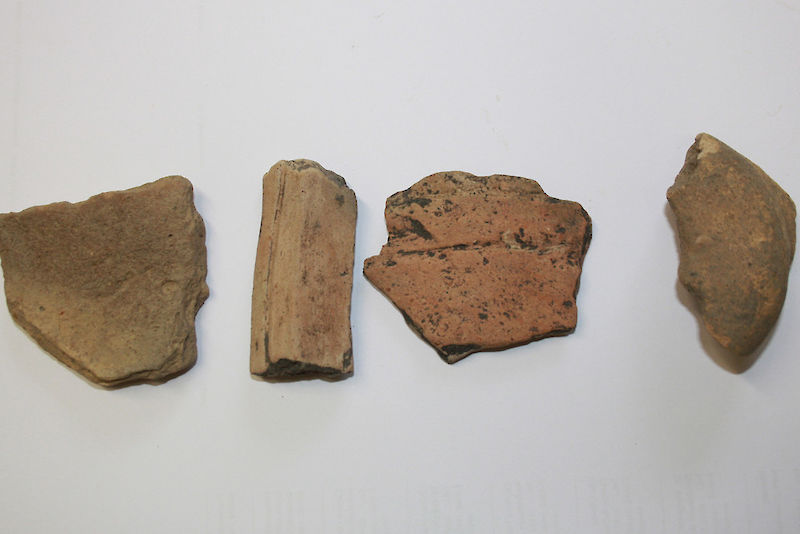
Potsherds of an age up to 2,500 years
© Tom Leonhardt
30.09.2015 in Research, Science

Robust clay: Chemist from Halle University finds glass needles in thousand-year-old ceramics from Brazil

5000 years ago the Brazilian natives mixed their clay with additional materials for improvement of the resistance and durability of their pottery. An important role played microscopically small glass needles of freshwater tree sponges, which was detected by an international team of researchers led by Dr. Filipe Natalio of the Institute of Chemistry at Halle University. Read more

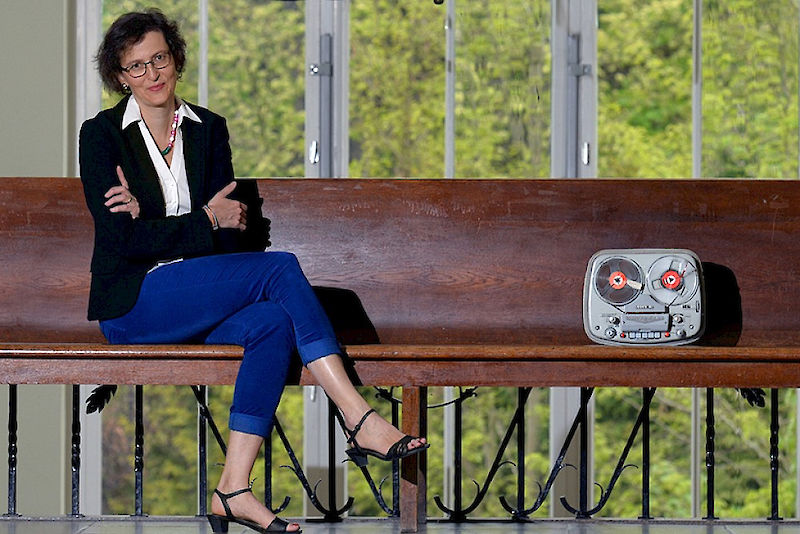
“It is a minor miracle that the accompanying raw data is almost fully complete,” explains Christina von Hodenberg about her object of research.
© Michael Deutsch
26.05.2015 in People, Science

One and a half tonnes of valuable files: winner of the Humbolt Research Award brings wealth of data to Halle

The data of the oldest German collection of biographical interviews recorded on audio tape was believed to have gone missing years ago. Now it is stored at MLU. The transfer was facilitated by a Humboldt Research Award winner, Prof. Christina von Hodenberg, who is originally from Queen Mary University London and currently working in Halle. Read more

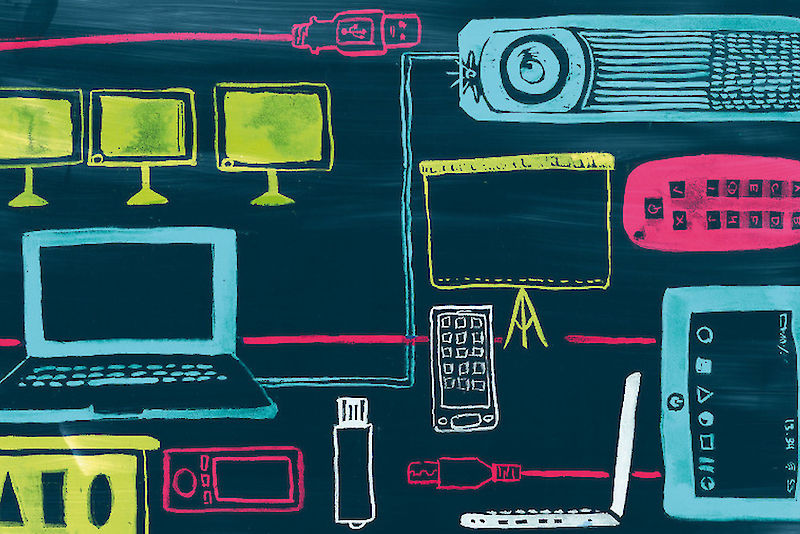
Faster, more flexible and more global: smartphones, tablets and laptops allow us to be reachable around the clock. (Graphic design: Unicom Werbeagentur GmbH)
20.04.2015 in Research, Science

No clocking off after hours?

Always online, always available. According to a study carried out by the Association of the German Information and Telecommunications Sector, 77 percent of Germany’s workforce is reachable by mobile phone or e-mail after hours by colleagues, managers or customers. Psychologists at Martin-Luther-University in Halle are getting to the bottom of the phenomenon of being constantly available. Read more

Auf unserer Webseite werden Cookies gemäß unserer Datenschutzerklärung verwendet. Wenn Sie weiter auf diesen Seiten surfen, erklären Sie sich damit einverstanden. Einverstanden