
A milestone for geobotany

Today, tradition, modern infrastructure and cuttingedge research all converge on the grounds of the university’s botanical garden. The construction of the two new buildings and the renovation of the department’s main building provide a total of 2.667 square metres of usable space and represent another improvement in study and research conditions. A total of around 27.8 million euros was invested in the project, which was funded by the European Regional Development Fund (ERDF) and carried out by Saxony-Anhalt Construction and Property Management (BLSA). This mammoth undertaking – one of the largest infrastructure projects at MLU in recent decades – was overseen by the university’s Department of Construction, Property and Building Management.
The result ensures the continuity and further development of botanical and ecological research at the university. MLU can build on a long tradition that dates back to the 17th century, when, in 1698, the university’s botanical garden was founded as Prussia’s first “hortus medicus” or medicinal garden. Today, the Department of Geobotany and Botanical Garden is a key player in the German Centre for Integrative Biodiversity Research (iDiv). After many years of funding by the German Research Foundation (DFG), the research centre is now financed by the three Central German states of Saxony-Anhalt, Thuringia and Saxony, the universities of Halle, Jena and Leipzig, and the Helmholtz Centre for Environmental Research. Since iDiv’s founding in 2012, MLU has become a recognised centre for biodiversity research. This is evidenced by numerous high-profile publications as well as extensive funding and awards, including two research grants from the European Research Council (ERC).
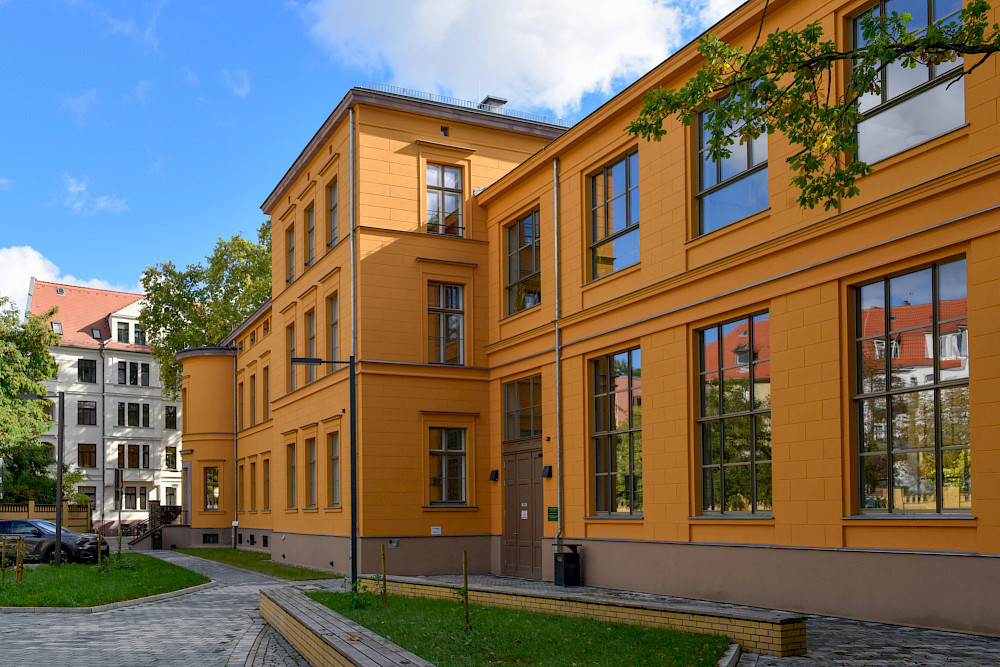
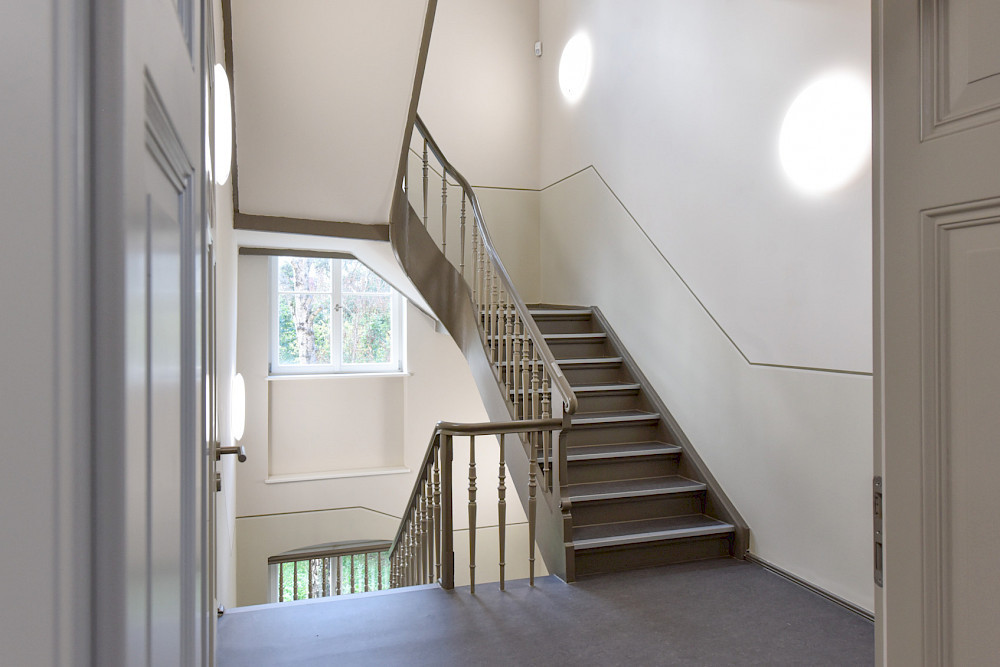
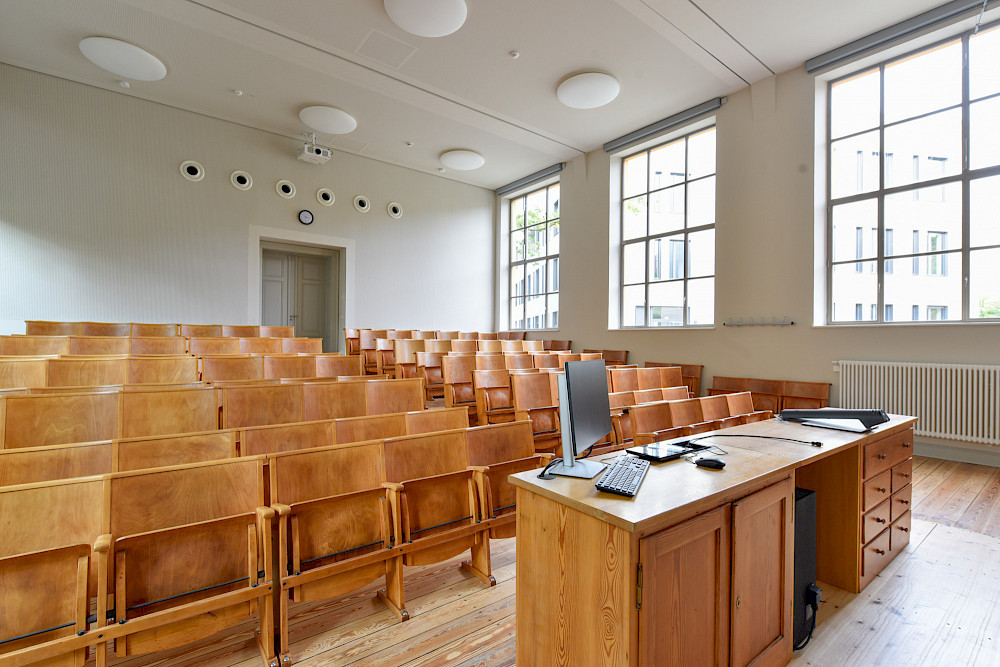
The structural prerequisites are now in place that will allow this success story to continue. At the heart of the construction projects, which were completed in 2025, is the department’s main building. It is the oldest department building of MLU and was renovated in line with conservation guidelines. Dating back to the 1840s, its historic character has been retained through its period doors and stone floors, the reinstatement of its original bold ochre-coloured paintwork, and the faithful replication of its windows. The lecture hall, whose original appearance has largely been maintained, has been fitted with modern equipment. Barrier-free access has been created that includes a lift, and there are now two modern seminar rooms that can hold up to 60 people, as well as a practical training area with 20 workstations.
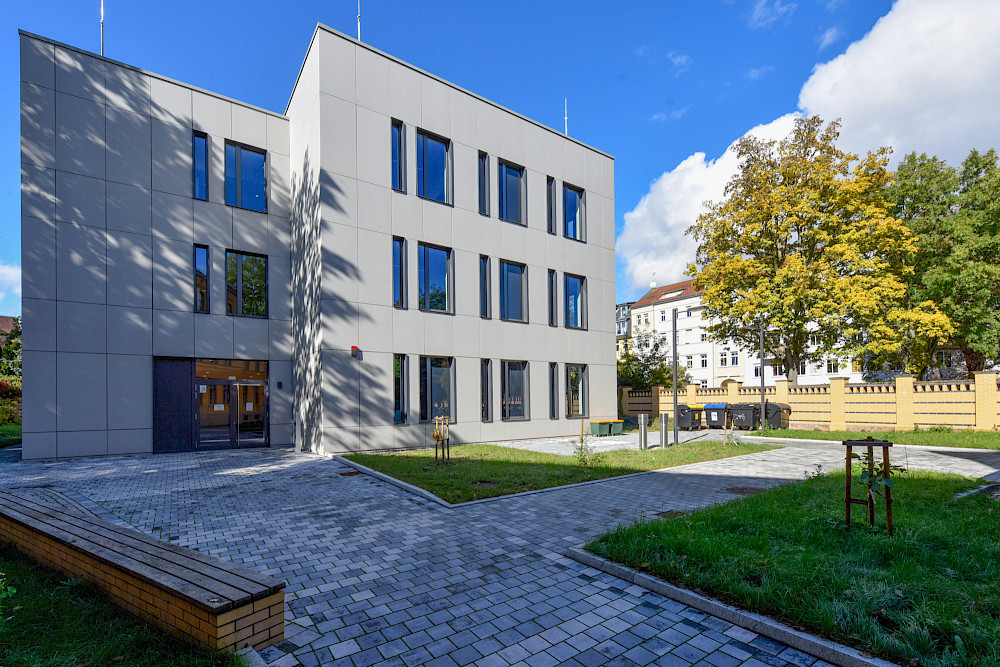
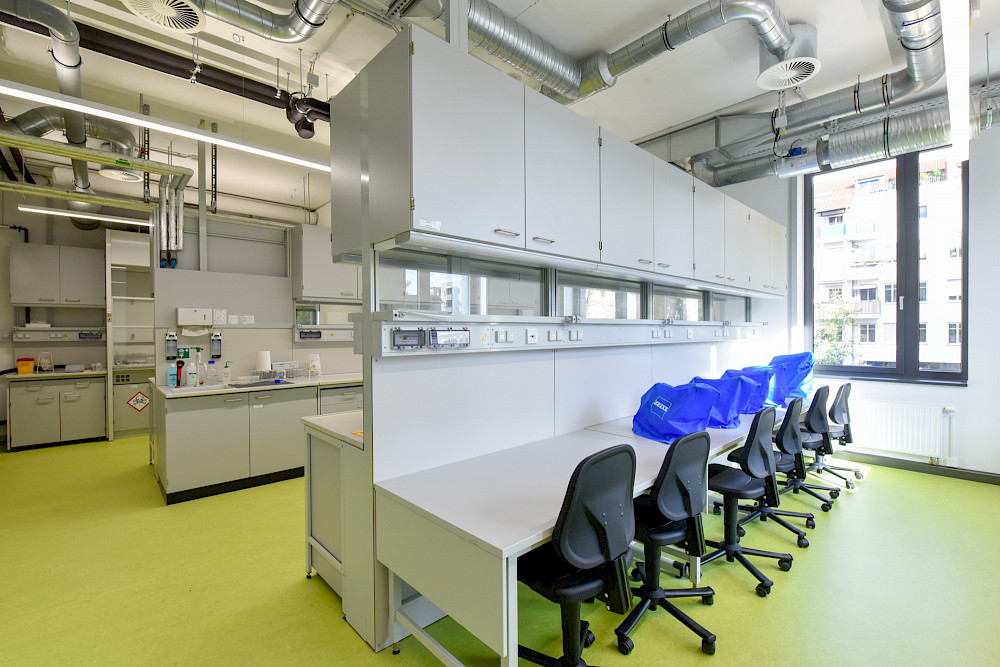
The new laboratory building consists of around 1.000 square metres of usable space and was constructed right next to the department’s main building. Large and small state-of-the-art laboratories, facility management and archive rooms, a seminar room, and communication zones are all contained under one roof. Family-friendly features have also been integrated into the infrastructure project – for example, the new research building includes a room for nursing infants.
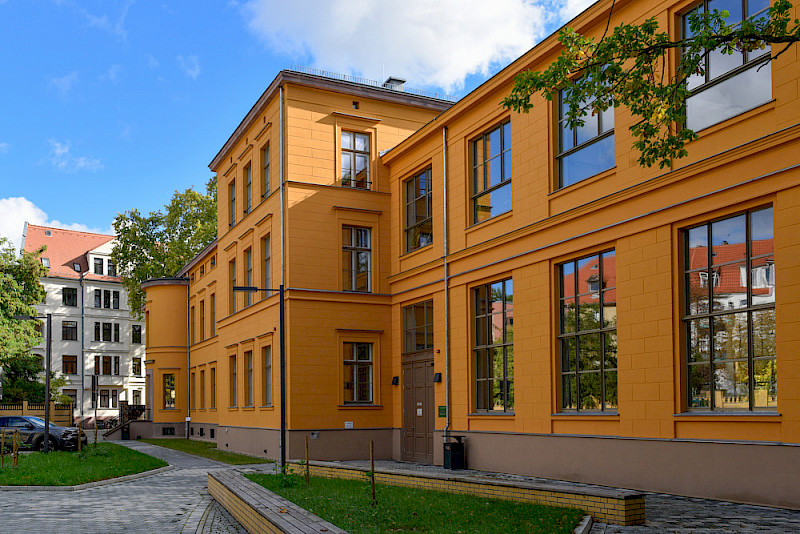
The Geobotany Institute building from the courtyard (Foto: Markus Scholz) 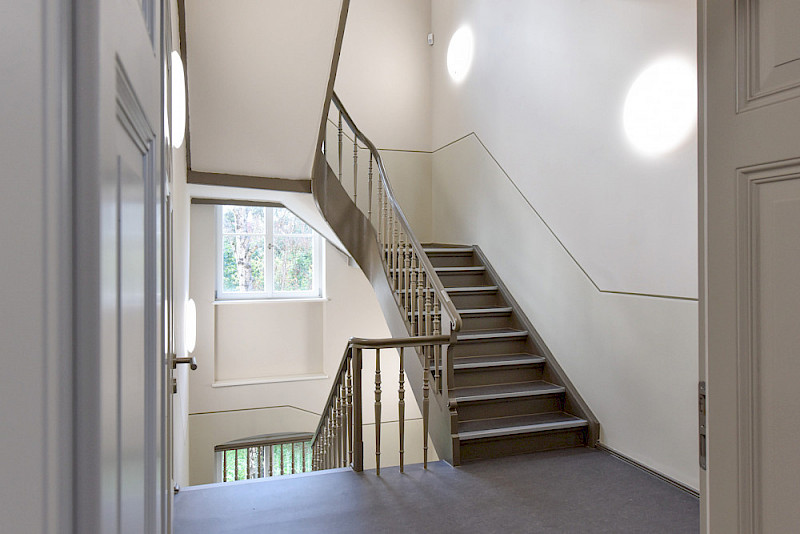
Renovated stairwell in the institute building (Foto: Markus Scholz) 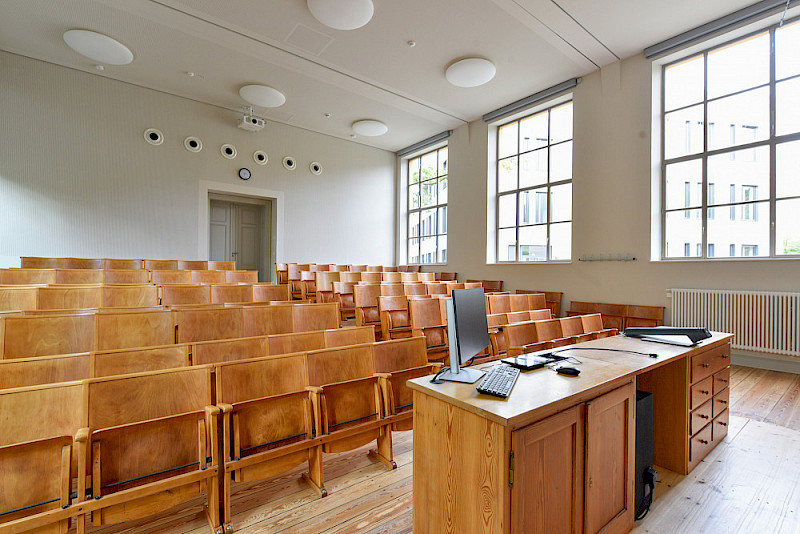
Historical lecture hall in the institute building (Foto: Markus Scholz) 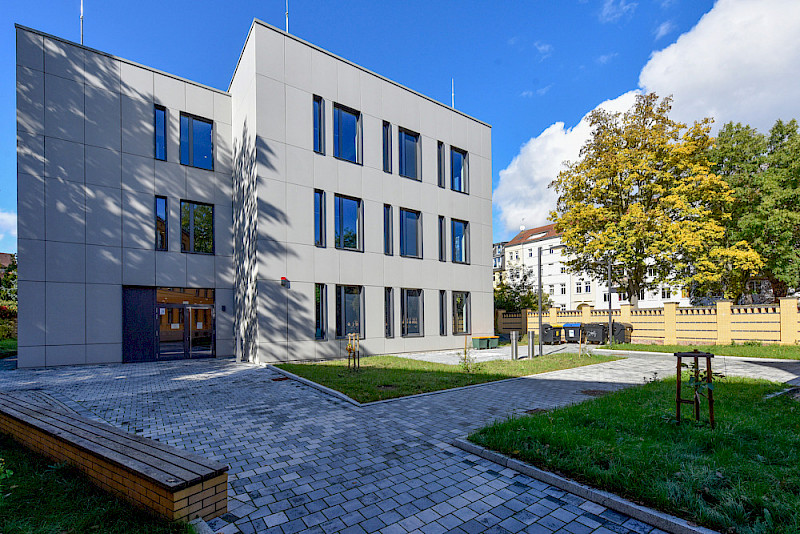
The newly built laboratory building has 1.000 square metres of usable space. (Foto: Markus Scholz) 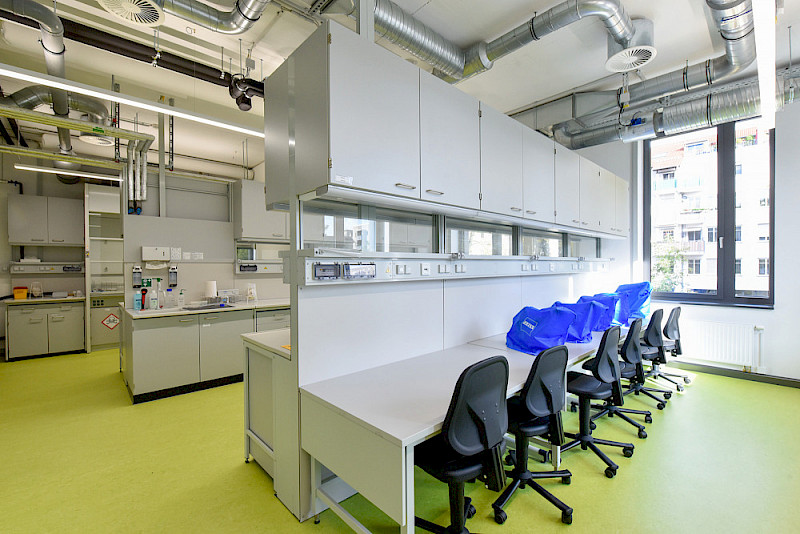
Many modern laboratories have been newly set up. (Foto: Markus Scholz)
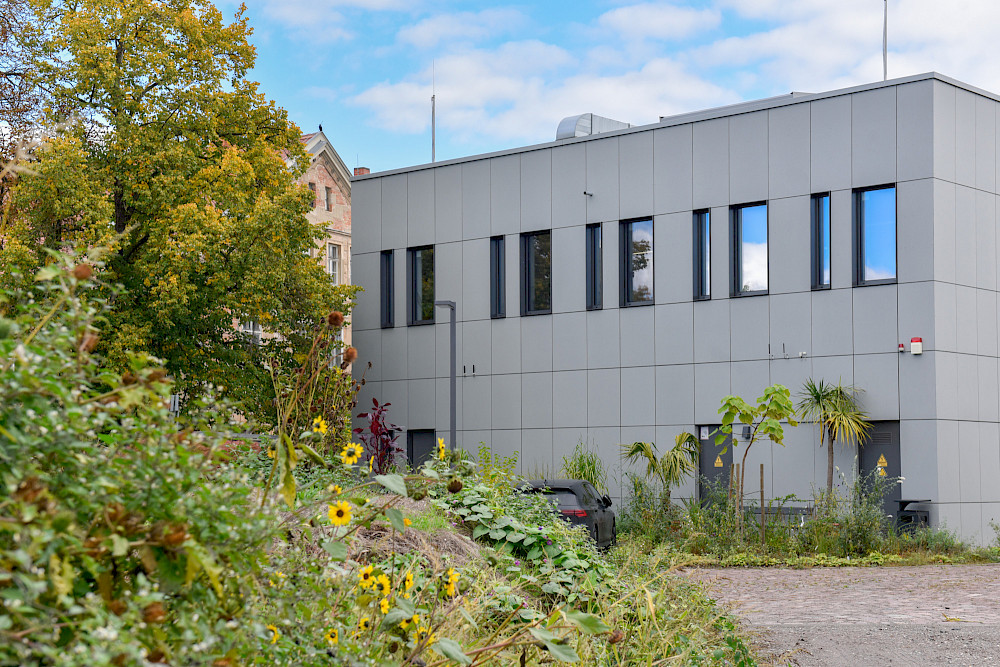
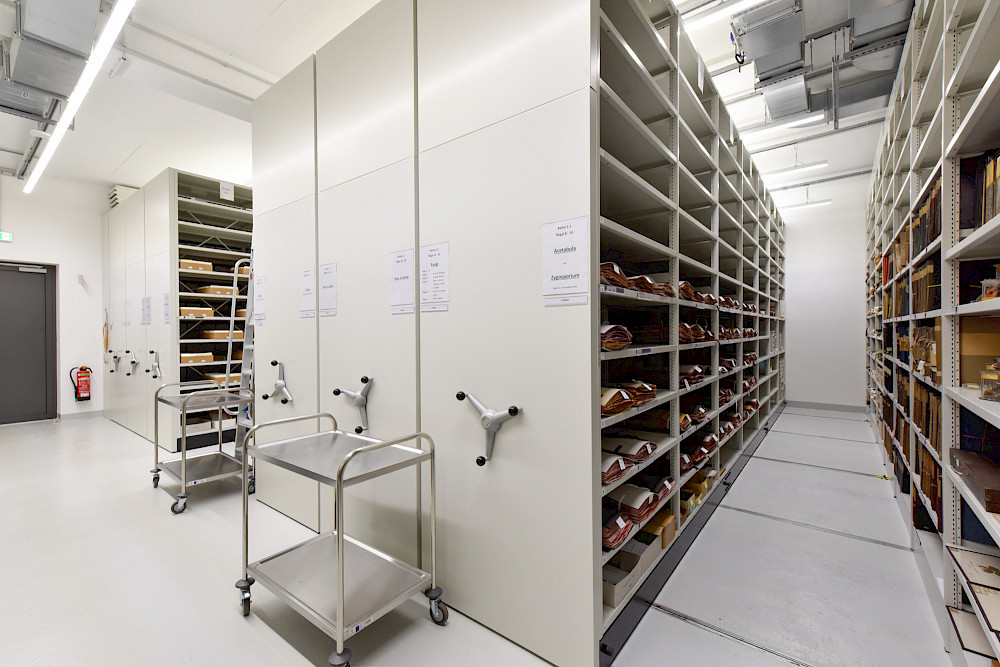
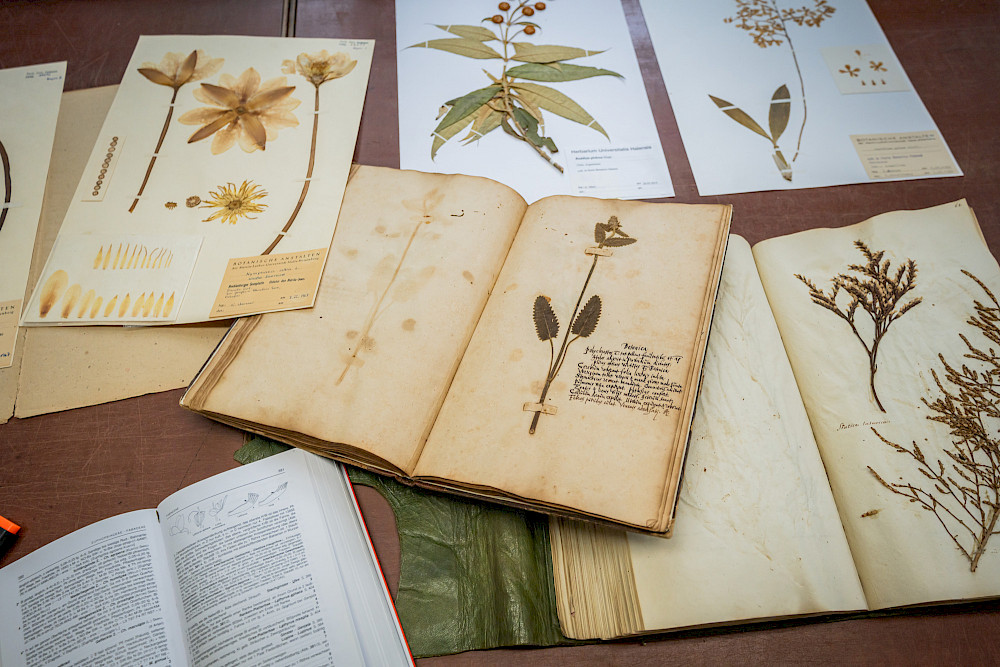
The new herbarium is located on the grounds of the Botanical Garden and contains two collection rooms, storage and facility management rooms, as well as workrooms where plants are prepared for storage in the archive. The herbarium preserves around 600.000 specimens that are invaluable for biodiversity research. Special temperature and humidity controls ensure that conditions remain stable. Optimised mobile shelving systems measuring more than three metres in height nearly double previous archive capacities. The two new buildings are powered by photovoltaic systems – an official first at the university. Like the department building, they are also wheelchair accessible.
The handover
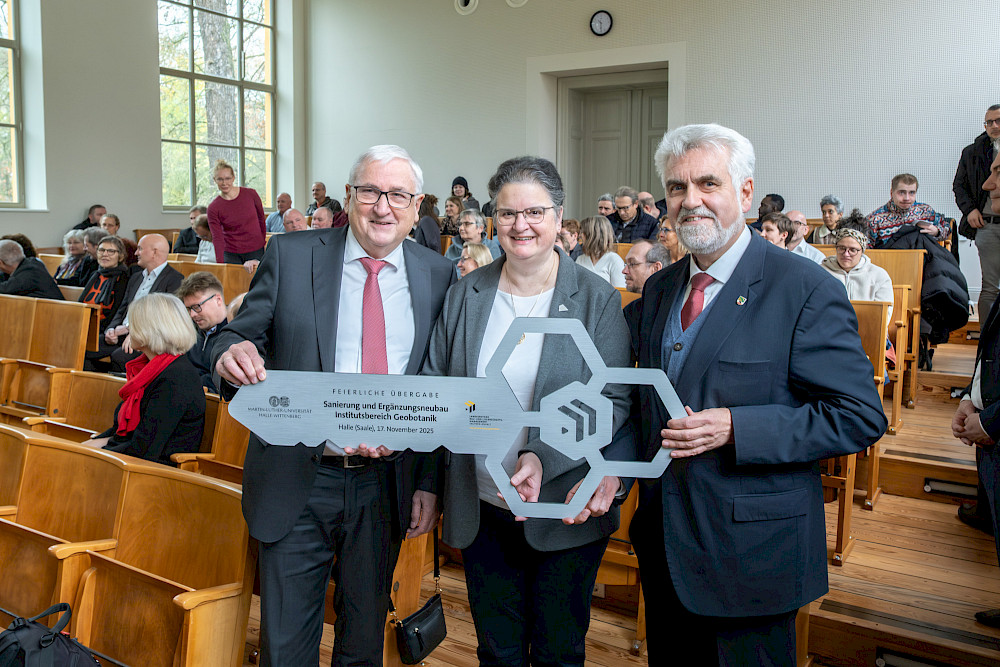
Symbolic handover of the keys to the renovated department building and the two new research buildings on the grounds of the Botanical Garden: After five years of construction, the completed geobotany complex was officially handed over to Rector Professor Claudia Becker, on 17 November 2025 by Saxony-Anhalt’s Minister of Finance Michael Richter (left) and Minister of Science Professor Armin Willingmann. At the ceremony, the ministers emphasised how important the investment is for Halle, a city with a long tradition of research, and for Saxony-Anhalt’s higher education landscape as a whole. “Research thrives when all the right conditions come together,” said Willingmann. Not only does research require bright minds, it also needs modern infrastructure – and this is where MLU’s Department of Geobotany now has an advantage. A digital art project depicting Neuwerk Abbey Church was also presented to the public during the handover ceremony. Remains of the abbey church were discovered during excavations carried out by the State Office for Heritage Management and Archaeology on the construction site of the new herbarium.