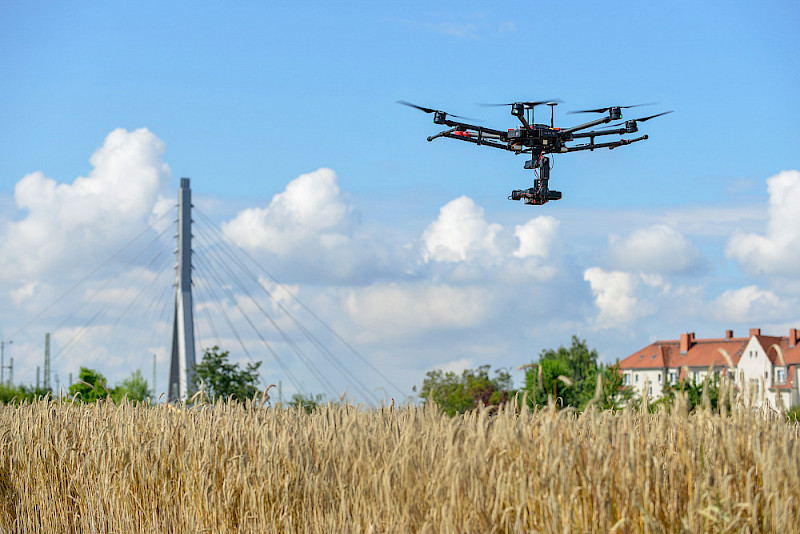
A drone is used to monitor plant growth at MLU’s test field in Julius Kühn Strasse.
© Markus Scholz
20.06.2025 in Yearbook, Science, Research, Knowledge Transfer

A booster for the bioconomy

In Saxony-Anhalt, the “Digitalization of Plant-Based Value Chains” (DiP) project consortium is advancing the connection between high-tech and plantbased value creation. With drones, genome research, digitalization, and sustainable production methods, a model region is emerging for the future of the bioeconomy. Read more

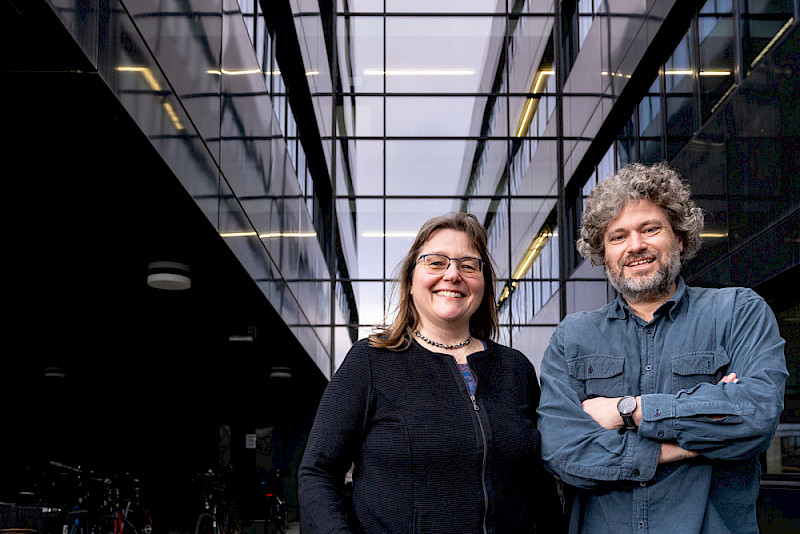
Andrea Sinz and Marcel Quint are the spokes- people for the new Collaborative Research Centre “Plant Proteoform Diversity”.
© Heiko Rebsch
19.06.2025 in Yearbook, Science, Research, Knowledge Transfer

Smart research for strong plants

How do individual mutations affect the structure and function of proteins in plants? A new Collaborative Research Centre at the University of Halle is looking into this issue. In the long term, this research could help to better prepare plants for the consequences of climate change and help to develop customised proteins. Read more

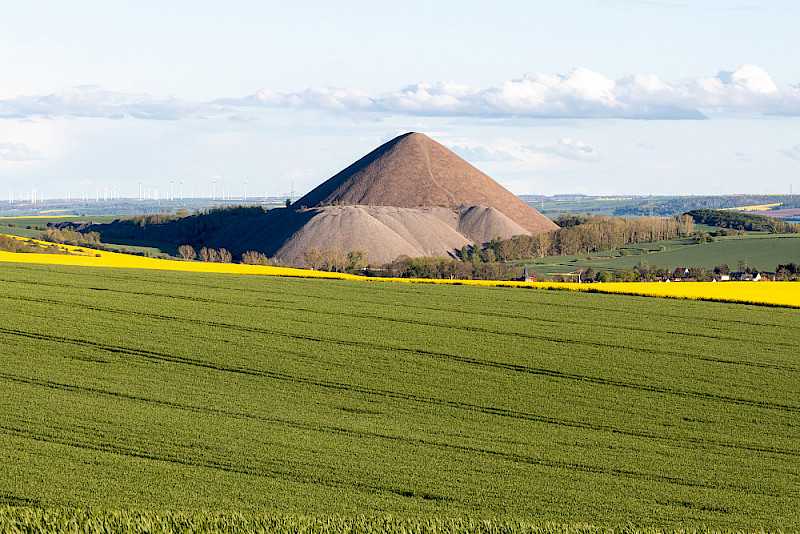
Evidence of the long-standing mining tradition in southern Saxony-Anhalt: a slag heap in the Mansfeld Land region
© Adobe Stock/fotowelt
05.06.2025 in Yearbook, Knowledge Transfer, Research, Science

Structural change: research fort he region

Germany has decided to gradually phase out the use of coal to generate electricity by 2038. What does that mean for Saxony-Anhalt? What opportunities can be found in the region? What are the challenges? The European Center of Just Transition Research and Impact-Driven Transfer (JTC) provides answers to these questions. The aim is to work with local districts to develop research-based solutions for their future development. The first branch office was opened in Zeitz on 4 June. Read more

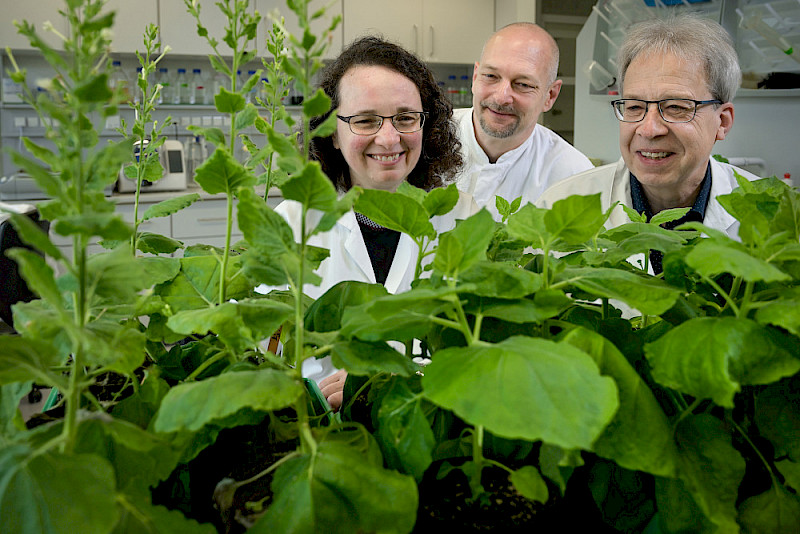
From left to right: Selma Gago Zachert, Torsten Gursinsky and Sven-Erik Behrens are collaborating on the project.
© Heiko Rebsch
11.06.2024 in Science, Research, Knowledge Transfer

A profile for the cell police

Farmers around the world apply four million tons of chemical pesticides onto their fields each year. A team of MLU researchers has been trying to put a stop to that using specially developed vaccines. The scientists now want to transfer their research from the laboratory to agricultural practice. Read more

Auf unserer Webseite werden Cookies gemäß unserer Datenschutzerklärung verwendet. Wenn Sie weiter auf diesen Seiten surfen, erklären Sie sich damit einverstanden. Einverstanden